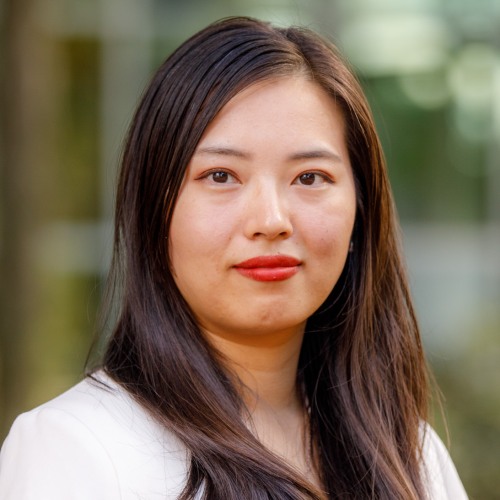
Ying Ma, Ph.D., Assistant Professor of Biostatistics and Edens Family Assistant Professor of Healthcare Communications and Technology, has received 3 grants from NSF and NIH. Ma’s overall research portfolio aims to develop novel statistical and computational methods for addressing all kinds of biomedical questions by leveraging genomics and genetics datasets, with applications that extend well beyond methodology. Her work advances methodology while also enabling applications that improve our understanding of disease processes, enhance prediction of treatment outcomes, and contribute to precision medicine. Ultimately, these efforts connect quantitative innovation to public health impact, linking molecular data with prevention, treatment, and health equity.
NIH: Integrative Computational Models for Decoding Disease Mechanisms and Predicting Drug Synergies in Spatial Transcriptomics. MIRA ESI R35 Outstanding Investigator Award
This project will develop novel statistical and computational methods to integrate Spatially multi-omics data with clinical, pharmacogenomic, and GWAS data to uncover how cellular spatial organization influences critical clinical phenotypes in complex tissues. By jointly modeling pharmacogenomic data in the context of cellular spatial organizations and pinpointing disease-associated spatial patterns, the proposed tools will overcome current limitations in leveraging heterogeneous data sources. Ultimately, this work will advance our understanding of how spatial heterogeneity drives disease progression and shapes therapeutic responses.
NSF: “Collaborative Research: SCH: Protecting Privacy and Promoting Fairness in Advanced Genomic Research using Federated Learning.” in collaboration with Northeastern University.
In this project, Ma will lead the development of a series of statistical and computational methods for large-scale, privacy-preserving analysis of biological data across multiple institutions. The project will address key barriers in multi-institutional collaboration by ensuring data confidentiality, supporting scalable and reproducible analysis. The framework is broadly applicable across biomedical domains, including genomics and genetics data. This work will equip the research community with practical tools for privacy-aware discovery and accelerate progress in precision medicine.
NSF/BIO-UKRI/BBSRC: “Integrative Deep Learning and Statistical Models for 3D Multimodal Analysis of Brain Structure”
This project will develop innovative statistical and computational methods to enable multimodal integration of molecular, structural, and connectivity data, addressing critical barriers in current spatial and neurobiological data analysis tools. This is a collaboration between a multidisciplinary team from Ying Ma, Ph.D., Alex Fleischmann, Ph.D., at Brown University, and Andreas Schaefer, Ph.D. from The FrancisCrick Institute in the UK.